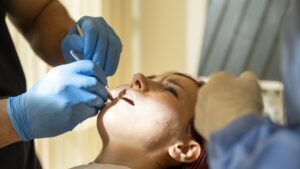
Upper dental implants in Minneapolis, MN replace missing upper teeth with permanent fixtures that look and function like natural teeth. Upper jaw implants can differ from lower jaw implants because the upper jaw often has different bone shape, density, and nearby sinus anatomy. This short guide explains how upper dental implants work, why the upper jaw is unique, who makes a good candidate, treatment options, timeline, risks, costs, and how to schedule a consult. Read on to learn what to expect and when additional procedures may be needed.
How Upper Dental Implants Work
An implant system has three main parts: the implant (a titanium or zirconia post placed in bone), the abutment (connector), and the crown (the visible tooth). The implant is surgically placed into the upper jaw where it bonds to bone through osseointegration. Good bone volume and quality are crucial for stable integration; weak or thin bone can require grafting before an implant will succeed. Proper planning ensures the implant supports chewing and looks natural.
How the Upper Jaw Is Different
Sinus anatomy and bone volume
The maxillary sinuses sit above the upper back teeth and reduce available bone height. When teeth are lost, the bone can shrink and the sinus may expand into the space. This often requires sinus lift or bone grafting before placing implants to create enough height for a secure implant.
Bone density and healing
Upper jaw bone tends to be less dense than lower jaw bone, especially in the back. Lower density can mean slightly longer healing and careful choice of implant size, shape, and surface. Your dentist will evaluate bone on 3D imaging to pick the best implant and healing timeline.
Who Is a Good Candidate for Upper Dental Implants
Good candidates are in generally good health, maintain oral hygiene, and have enough bone or are willing to undergo grafting. Non-smokers heal better; heavy smoking raises the risk of failure. Chronic conditions like uncontrolled diabetes should be managed before surgery. When bone is insufficient, a sinus lift or grafting is commonly recommended to make upper dental implants viable.
Types of Upper Dental Implant Solutions
Single-tooth implant and crown
Best for replacing one missing tooth. Conserves nearby teeth and offers a natural look.
Implant-supported bridge for multiple teeth
Uses two or more implants to support a bridge, ideal when several adjacent teeth are missing.
All-On-4 / full-arch restorations
Fixed full-arch restorations on fewer implants for patients missing most or all upper teeth. Often allows faster function and easier cleaning than removable dentures.
Zirconia vs. titanium implants
Titanium is well-researched and highly durable. Zirconia is metal-free and may offer aesthetic advantages and biocompatibility for some patients. Your dentist will discuss pros and cons for upper jaw placement.
Treatment Process & Timeline for Upper Dental Implants
Consultation and 3D imaging
An exam and CBCT 3D scan assess bone, sinus, and anatomy. A treatment plan and cost estimate follow.
Surgery and immediate steps
Implant placement takes one appointment. If grafting or sinus lift is needed, that may occur first or at the same time. Short-term soreness and swelling are normal.
Healing (osseointegration) and final restoration
Osseointegration usually takes 3–6 months depending on bone quality. After healing, the abutment and crown are placed and checked for fit and bite.
Risks, Complications, and Aftercare
Risks include infection, sinus complications, and implant failure. Warning signs are persistent pain, swelling, or loosening. Daily care—brushing, flossing, and avoiding hard foods during healing—plus regular dental check-ups help protect upper dental implants.
Cost Considerations and Financing Options
Costs vary by number of implants, grafting or sinus lifts, implant material, and lab work. Many practices accept insurance for parts of treatment, offer in-house financing, and partner with third-party plans to spread payments.
Why Choose Parkway Dental Center for Upper Dental Implants
Parkway Dental Center offers implant expertise including All-On-4 and zirconia options, with a state-of-the-art on-site lab for faster, precise restorations. The doctor team—Dr. Catalin Constantin, Dr. Michael Determan, and Dr. Magaly Ferreira, DDS—works collaboratively to create predictable plans. Financing and major insurance options are available to help make treatment accessible.
Next Steps: Scheduling a Consultation
To book a consultation, call or use the patient portal. Bring photo ID, insurance information, and a list of current medications. The team will review imaging, answer questions, and create a personalized plan for upper dental implants.